
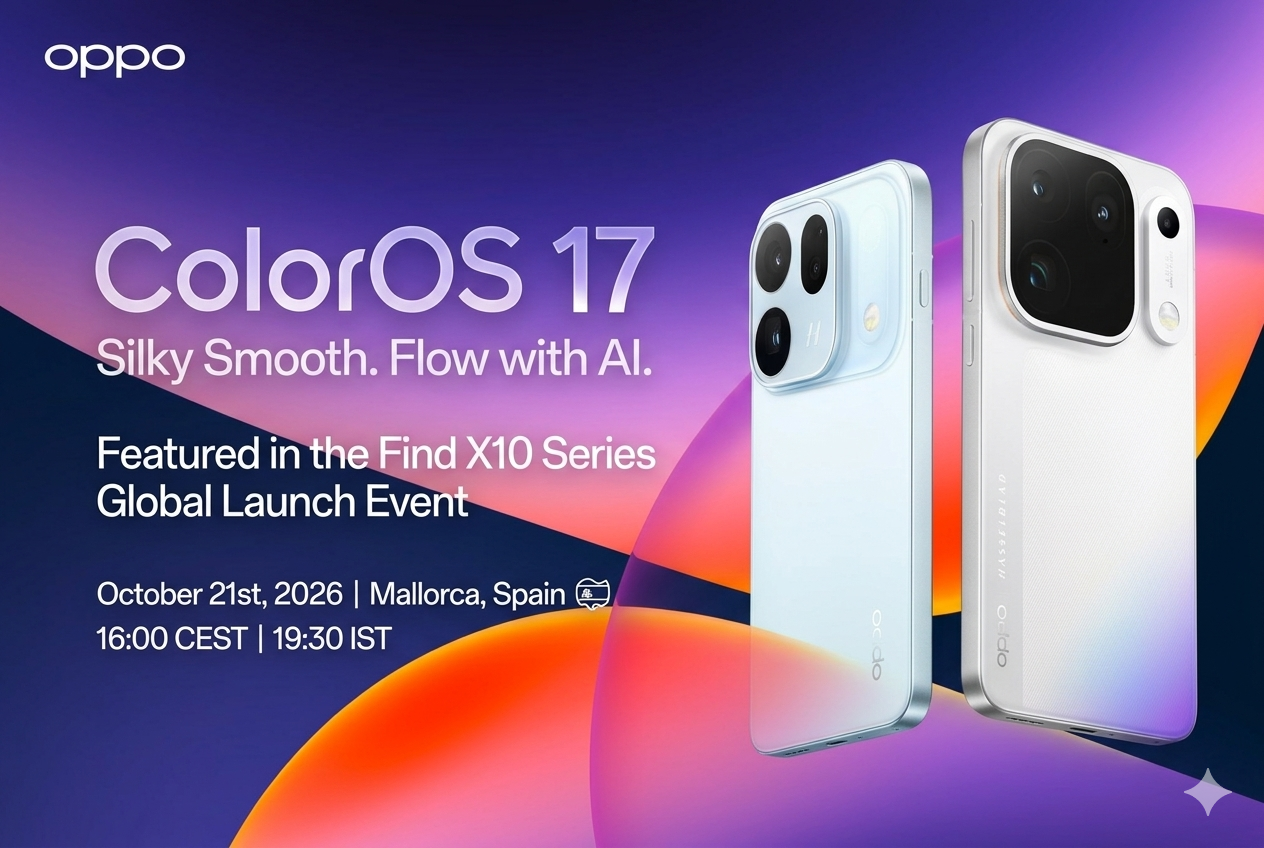
The mobile tech landscape is bracing for a massive shift as rumors and certification listings surrounding the highly anticipated Oppo Find X10 series continue to surface. Positioned to redefine mobile photography, performance, and battery endurance, Oppo’s next-generation flagship line aims to set new benchmarks in the premium smartphone category. Whether you are tracking the latest Oppo Find X10 launch date or comparing hardware across models like the Oppo Find X10 and Oppo Find X10 Pro Max, this deep-dive article covers every spec, model, price projection, and architectural highlight you need to know.
From custom MariSilicon / ISP image tuning to Hasselblad color science, Silicon-Carbon anode high-density batteries, and 3nm processing nodes, the Oppo Find X10 family is engineered to compete directly for the top spot in flagship smartphone rankings. Read on for an exhaustive breakdown of the lineup specifications, expected launch pricing, camera capabilities, and a full side-by-side head-to-head analysis comparing the standard Find X10 against the high-end Find X10 Pro Max.



Oppo Find X10 Series Model Lineup & Market Segmentation
To cater to diverse user preferences—ranging from compact power seekers to ultra-premium photography professionals—Oppo is expected to expand the Find X10 family across five distinct models. Each variant brings targeted hardware choices while retaining the premium build quality signature to the series.
Detailed Overview of Find X10 Models
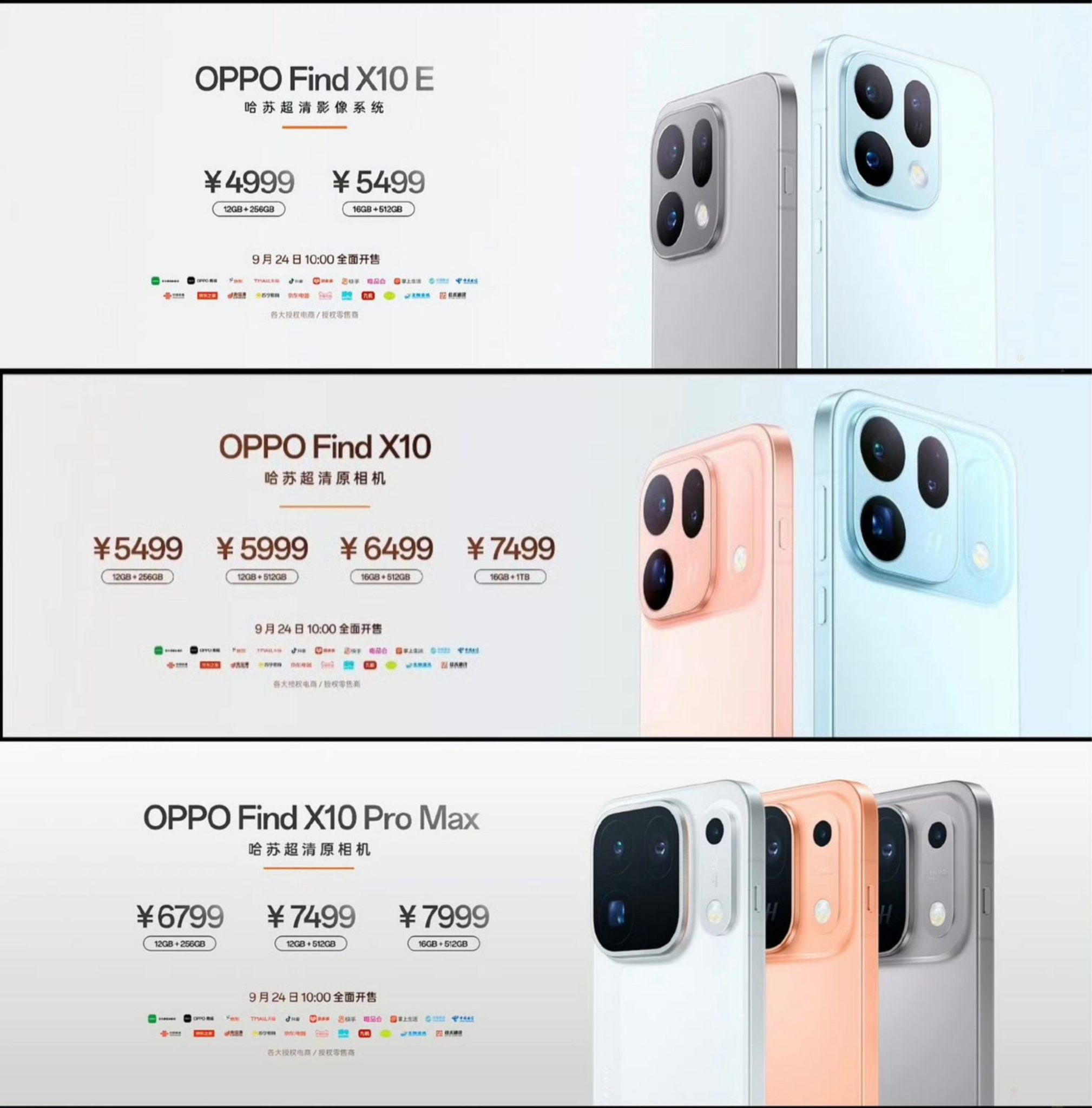
Below is the anticipated lineup breakdown for the upcoming flagship generation:
Oppo Find X10 e: Serving as the accessible flagship entry point, the Find X10 e balances top-tier processing power with streamlined camera optics, offering premium speed at a lower price point.
Oppo Find X10: Features a 6.59-inch 1.5K Flat LTPO 4.0 AMOLED display (1272 x 2768 pixels, 462 ppi, up to 144Hz adaptive refresh rate, 3840Hz PWM dimming, BT.2020 ultra-wide color gaming panel, 10-bit color depth, Corning Gorilla Glass Victus 2, 3600 nits peak brightness, and eye-friendly high red-light output). Powered by the MediaTek Dimensity 9600M chipset (3nm TSMC process, octa-core CPU with 1x 4.21 GHz, 3x 3.5 GHz, 4x 2.7 GHz, and ARM G1-Ultra GPU) alongside custom MariSilicon X2 ISP co-processing. Camera architecture comprises a 200MP main sensor (f/1.6, 23mm, 1/1.4", OIS), 50MP ultra-wide sensor (f/2.0, 15mm, 120° FOV), and 200MP periscope telephoto (f/2.6, 65mm, 1/1.56", OIS, 2.8x optical zoom) with Hasselblad Color Calibration and 8K/4K 120fps video recording. It packs a massive 8,000mAh Silicon-Carbon anode battery supporting 80W wired fast charging, 50W wireless charging, 10W reverse wireless, and UFCS/PPS compatibility. Protected by IP68/IP69 dust and water resistance, stereo speakers, Wi-Fi 7, Bluetooth 6.2, ultrasonic under-display fingerprint sensor, USB Type-C 3.2, optional satellite connectivity, and ColorOS 17 based on Android 17. Available in 12GB/16GB LPDDR5X RAM and 256GB/512GB/1TB UFS 4.1 storage options. Expected India launch price: ₹80,000 to ₹95,000.
Oppo Find X10 Pro: Designed for demanding users, the Pro variant adds a 2K display, larger Silicon-Carbon battery capacity, upgraded periscope telephoto sensors, and faster wireless charging speeds.
SPONSORED AD
Oppo Find X10 Ultra: The undisputed camera king of the range, boasting dual periscope telephoto lenses (including a 200MP zoom module), 1-inch main sensor, custom imaging glass, and raw 14-bit Hasselblad RAW shooting modes.
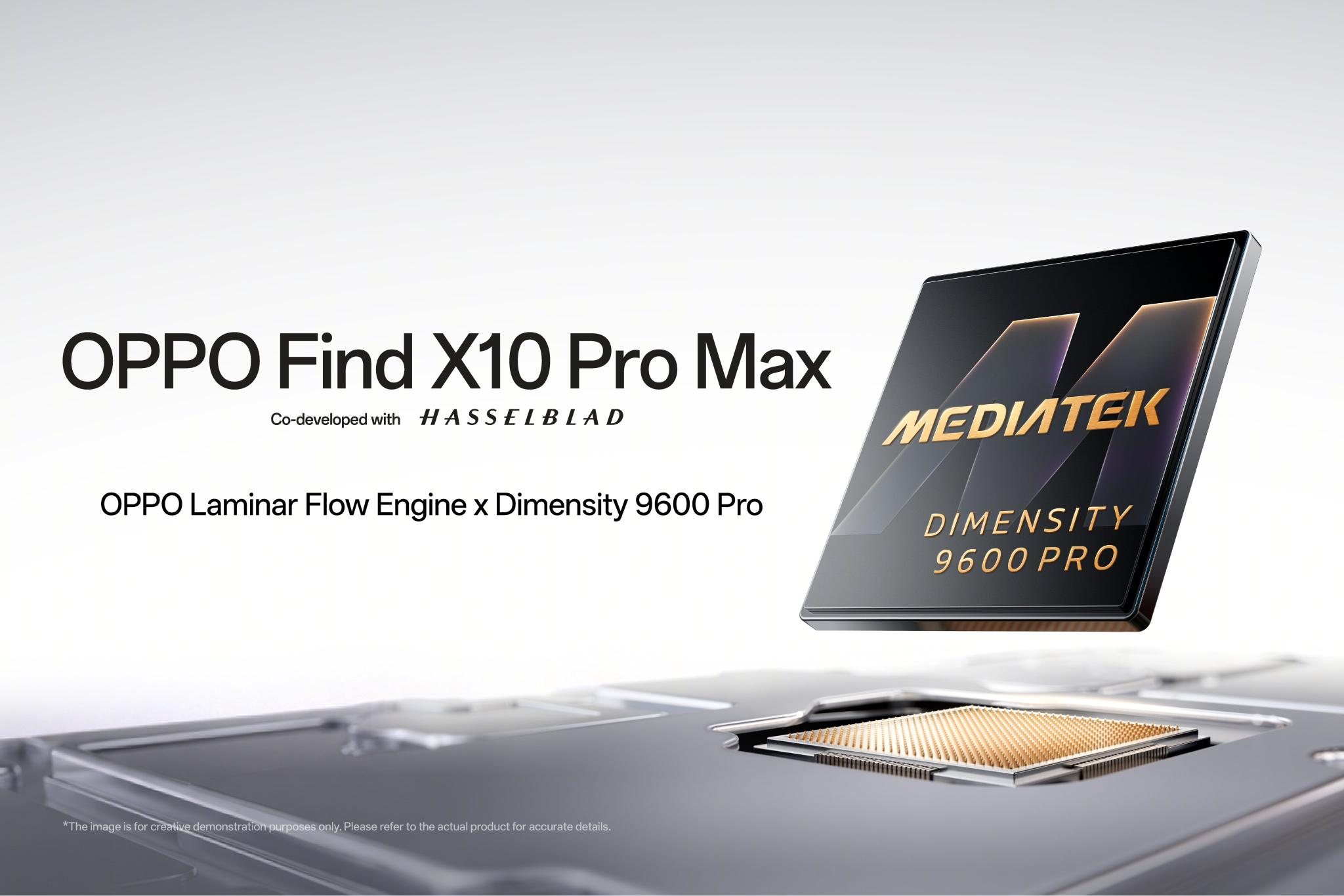
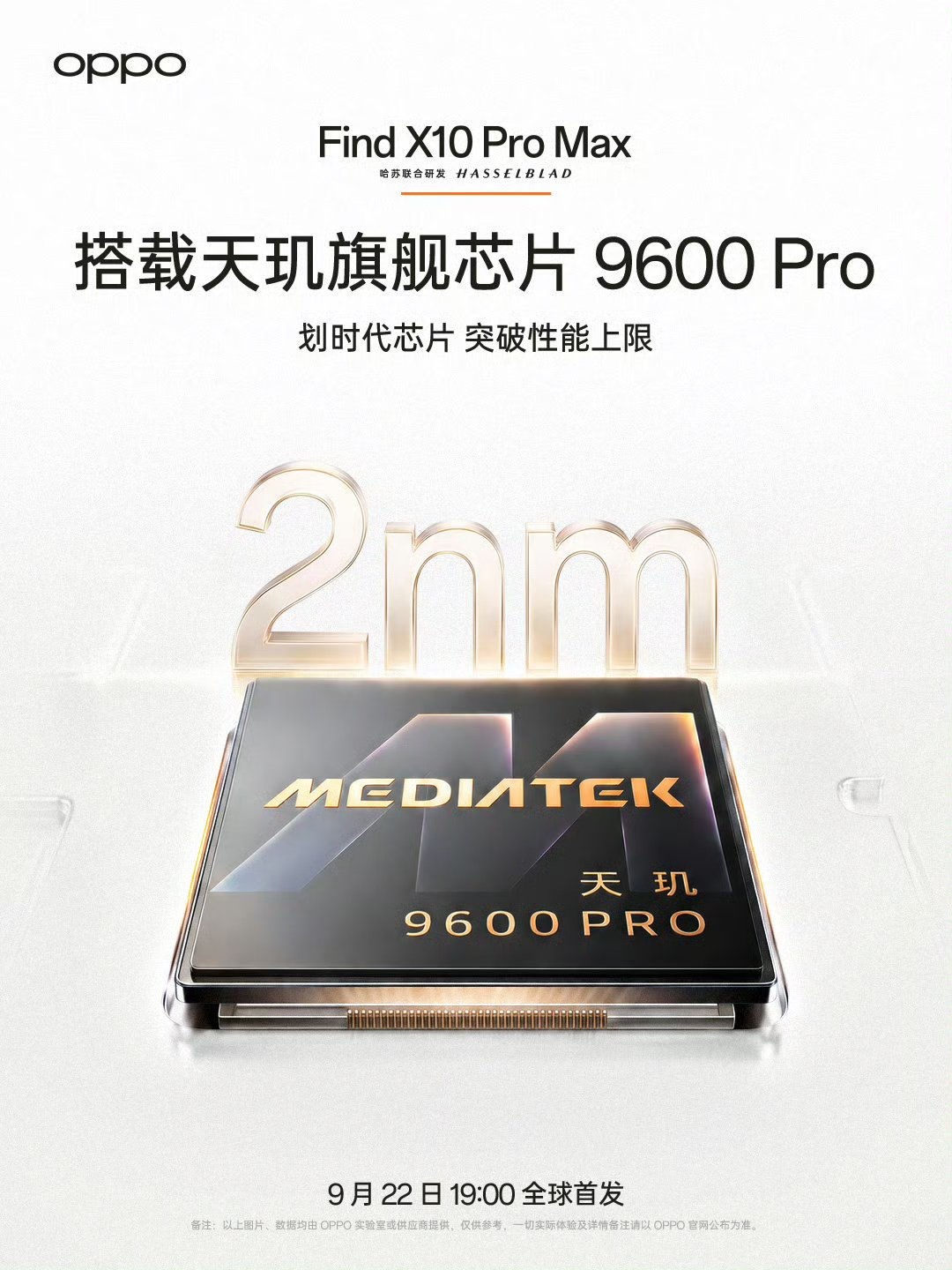
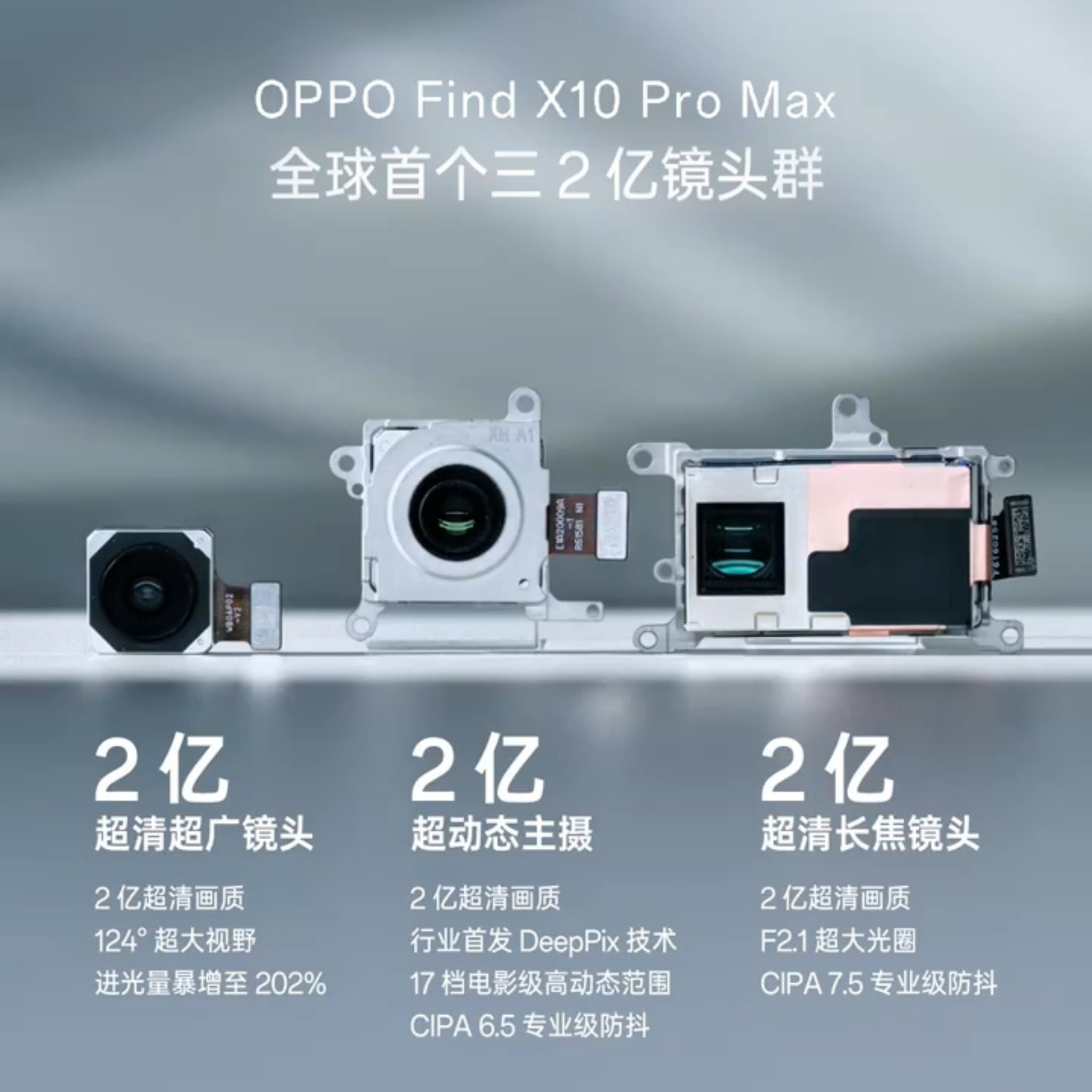
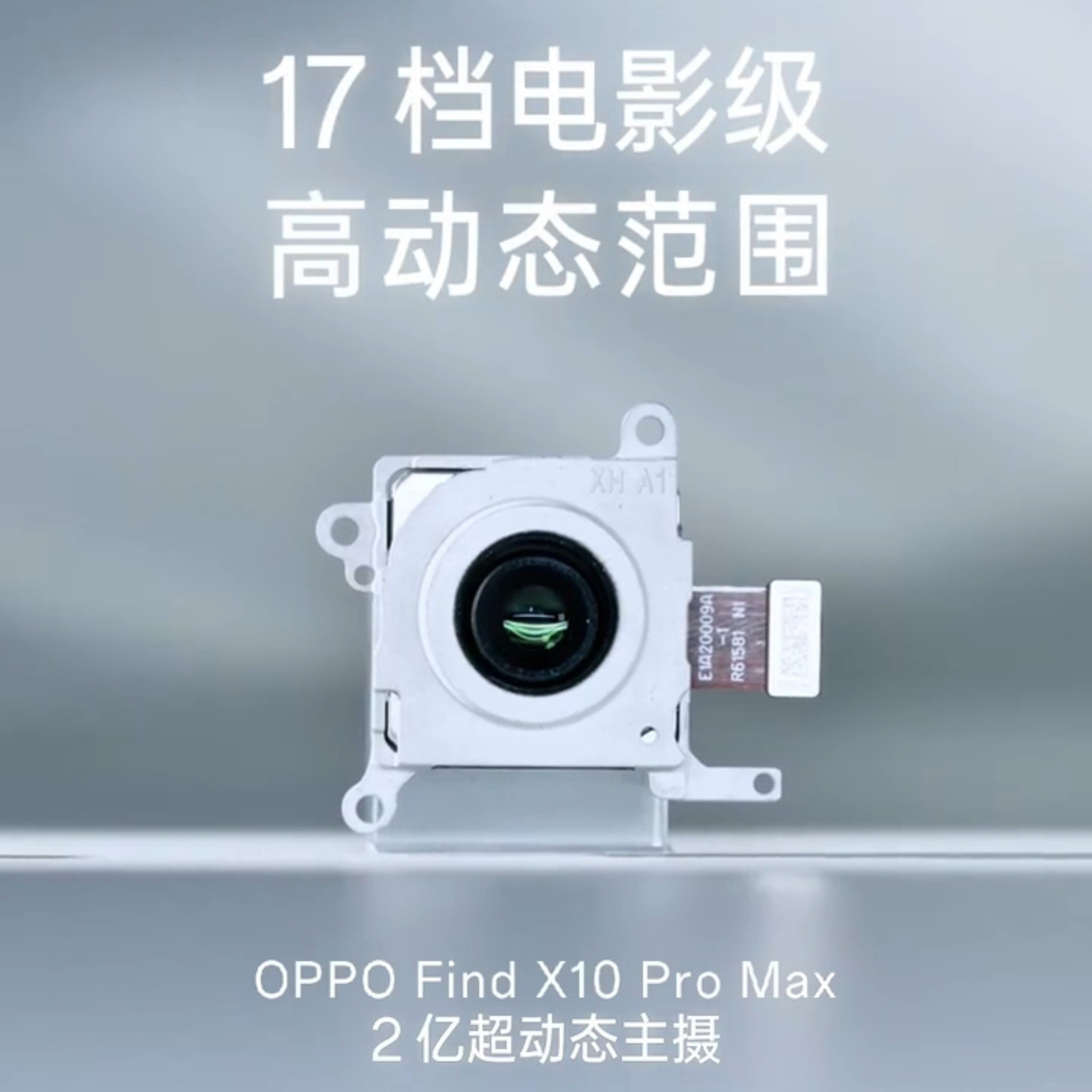
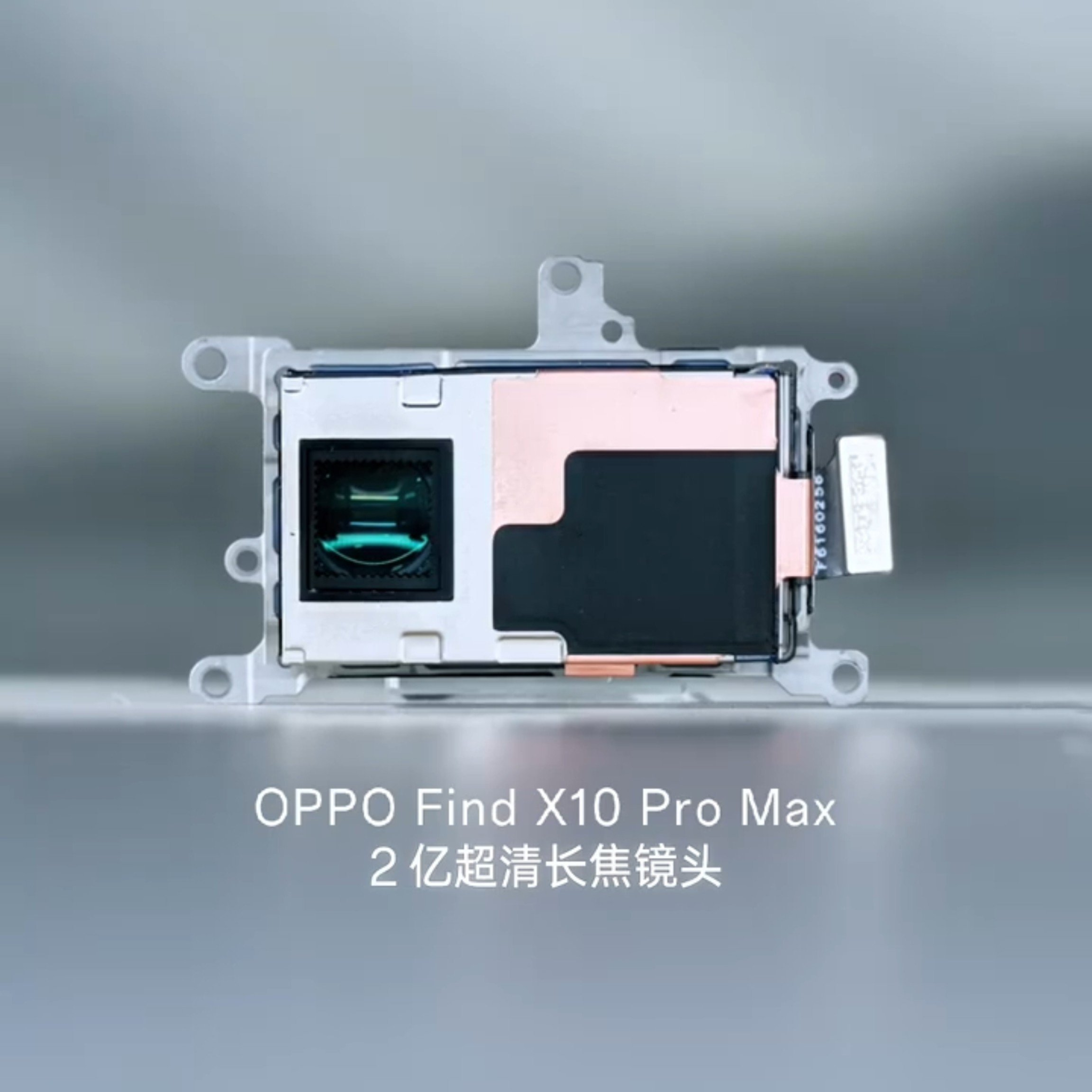
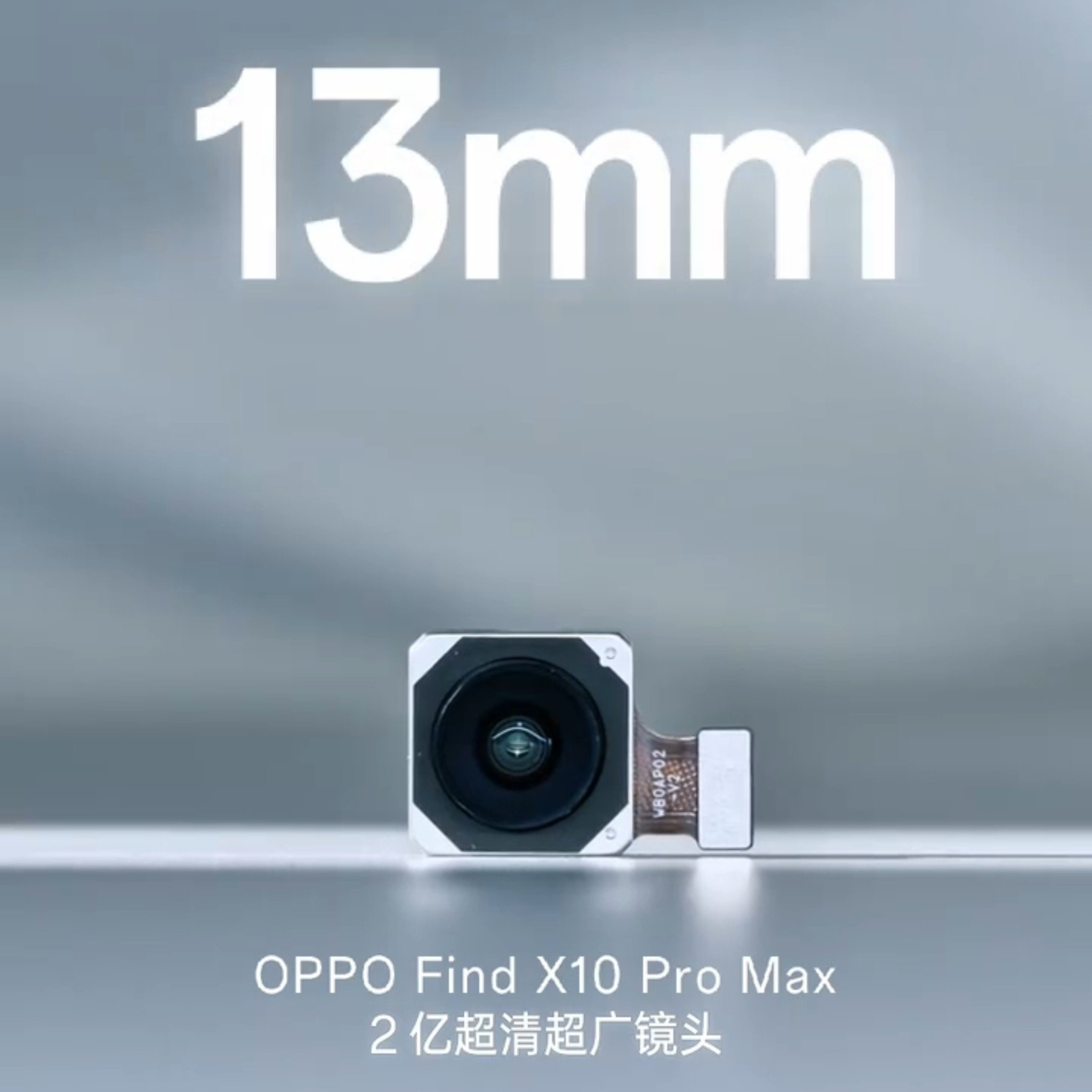
Oppo Find X10 Pro Max: Features a 6.78-inch Micro-Quad-Curved 1.5K/2K LTPO 4.0 AMOLED display (2772 x 1272 resolution, up to 144Hz refresh rate, BT.2020 ultra-wide color gamut, Dolby Vision, HDR10+, 10-bit color depth, and eye-health optimized red-light output). Driven by the MediaTek Dimensity 9600 Pro chipset (2nm process node) coupled with the dedicated MariSilicon X2 ISP co-processor for advanced computational photography, real-time 14-bit RAW processing, and Hasselblad Natural Color Calibration. Camera hardware incorporates a triple 200MP camera system: 200MP main sensor (OIS), 200MP ultra-wide lens (124° FOV), and 200MP periscope telephoto module (3x optical zoom, OIS) paired with a 50MP front camera. Houses a massive 8,000mAh (up to 10,000mAh) Silicon-Carbon battery supporting 80W high-speed wired fast charging and 67W wireless charging. Includes satellite connectivity support, IP68/IP69 ingress protection, USB Type-C 3.2, Wi-Fi 7, Bluetooth 6.2, and ColorOS 17 based on Android 17. Available in 12GB/16GB LPDDR5X RAM and 256GB/512GB/1TB UFS 4.1 configurations. Pricing starts at 7,999 CNY (~$1,200 USD) during China pre-sale, with expected India pricing around ₹1,200,000.
Technical Specifications & Architectural Features
Display Technology: 6.82-inch Micro-Quad-Curved LTPO 4.0 AMOLED, 1-120Hz dynamic refresh rate, 2160Hz High-Frequency PWM dimming, Dolby Vision support, and up to 4,500 nits local peak brightness.

Processor & Silicon: MediaTek Dimensity 9400 (3nm) on standard and Pro variants; Qualcomm Snapdragon 8 Elite (3nm) on Ultra models, paired with LPDDR5X RAM and UFS 4.0 storage.
Hasselblad Camera System: 50MP Sony LYT-900 1-inch main sensor with gimbal-grade OIS, 50MP ultra-wide sensor, and dual 50MP/200MP periscope telephoto sensors supporting up to 120x digital zoom.
Battery & Charging: 6,200mAh to 6,500mAh high-density Silicon-Carbon battery cells, 100W SUPERVOOC wired fast charging, and 50W AIRVOOC magnetic wireless charging.
Software & AI Integration: ColorOS 15 based on Android 15, featuring generative AI photography tools, real-time audio translation, and system-level performance optimization engines.
Comprehensive Comparison: Oppo Find X10 vs Oppo Find X10 Pro Max
Within Oppo’s flagship lineup, the primary comparison lies between the balanced base flagship Oppo Find X10 and the top-of-the-line Oppo Find X10 Pro Max. Both devices offer high-end media experience and Dimensity 9400 processing, but differ significantly in display architecture, battery scale, periscope zoom hardware, and luxury features.
Key Lineup Differences
Head-to-Head Specification Comparison Table
Below is an in-depth side-by-side technical breakdown comparing the flagship models of both smartphone lineups:
Display & Screen Form Factor: The Find X10 features a 6.59-inch 1.5K Flat LTPO 4.0 AMOLED panel with 1272 x 2768 resolution and 3840Hz PWM dimming, whereas the Find X10 Pro Max steps up to a larger 6.78-inch Micro-Quad-Curved 1.5K/2K display (2772 x 1272) with up to 144Hz adaptive refresh rate and Dolby Vision support.
Camera Setup & Hasselblad Optics: The standard Find X10 uses a dual 200MP setup (200MP main + 200MP 2.8x periscope telephoto) alongside a 50MP 120° ultra-wide lens, while the Find X10 Pro Max features a full triple 200MP camera system (200MP main, 200MP 124° ultra-wide, and 200MP 3x periscope telephoto) tuned by Hasselblad color calibration.
Battery Endurance & Silicon Hardware: Both flagship devices feature 8,000mAh Silicon-Carbon battery cells with 80W wired charging. The Find X10 is powered by the 3nm Dimensity 9600M, while the Find X10 Pro Max upgrades to the 2nm Dimensity 9600 Pro chipset and up to 67W wireless charging.
Key Strategic Takeaways: Which Flagship Should You Buy?
When choosing between the Oppo Find X10 and the Oppo Find X10 Pro Max, your choice will depend on whether you prefer a compact flat screen at a lower price point or an uncompromised quad-curved flagship with ultra-high-resolution 200MP zoom capability.
Summary Recommendation
Feature / Specification | Oppo Find X10 | Oppo Find X10 Pro Max |
|---|---|---|
Display Size & Type | 6.59" 1.5K Flat LTPO 4.0 AMOLED (1272x2768, 144Hz, 3840Hz PWM) | 6.78" 1.5K/2K Micro-Quad-Curved LTPO 4.0 (2772x1272, 144Hz) |
Processor | MediaTek Dimensity 9600M (3nm) | MediaTek Dimensity 9600 Pro (2nm) |
Main Camera | 200MP (f/1.6, 23mm, 1/1.4", OIS) | 200MP Hasselblad System (OIS) |
| Periscope Telephoto | 200MP (f/2.6, 65mm, 1/1.56", OIS, 2.8x Optical) | 200MP Hasselblad (3x Optical, OIS) |
ISP / Image Processor | MariSilicon X2 ISP | MariSilicon X2 ISP |
Battery Capacity | 8,000mAh Silicon-Carbon | 8,000mAh (up to 10,000mAh) |
| Wired / Wireless Charging | 80W Wired / 50W Wireless / 10W Reverse | 80W Wired / 67W Wireless |
Starting Price (India / Global) | ₹80,000 - ₹95,000 | ~₹1,20,000 ($1,200 USD) |
Direct Comparison: Oppo Find X10 Series vs Vivo X500 Series
With the simultaneous debuts of both the Oppo Find X10 series and the Vivo X500 series, the flagship market sees intense rivalry across performance, optical engineering, and battery innovations.
Lineup & Model Mapping
Vivo’s new lineup consists of three core models—the standard Vivo X500, the compact Vivo X500 Pro, and the top-tier Vivo X500 Pro Max. Below is how the two flagship families compare across key specifications and hardware features:
| Specification | Oppo Find X10 | Oppo Find X10 Pro Max | Vivo X500 | Vivo X500 Pro Max |
|---|---|---|---|---|
Display Size & Resolution | 6.59" 1.5K Flat LTPO 4.0 AMOLED (1272x2768, 1-144Hz, 3840Hz PWM, 3600 nits peak, BT.2020, 10-bit, Gorilla Glass Victus 2) | 6.78" 1.5K/2K Micro-Quad-Curved LTPO 4.0 AMOLED (2772x1272, 1-144Hz, 2160Hz PWM, 4500 nits peak, Dolby Vision, HDR10+) | 6.59" 1.5K Flat LTPO AMOLED (1260x2750, 1-144Hz, 2160Hz PWM, 3000 nits peak, 10-bit color, Schott Xensation Alpha) | 6.85" 2K Quad-Curved LTPO AMOLED (1440x3168, 1-144Hz, 2160Hz PWM, 5000 nits peak, Dolby Vision, HDR10+, Armor Glass) |
Chipset / Processor | MediaTek Dimensity 9600M (3nm TSMC, 1x 4.21 GHz, 3x 3.5 GHz, 4x 2.7 GHz, ARM G1-Ultra GPU) | MediaTek Dimensity 9600 Pro (2nm node, octa-core CPU, Next-Gen ARM Immortalis GPU) | MediaTek Dimensity 9600M (3nm TSMC, octa-core CPU, ARM G1-Ultra GPU) | MediaTek Dimensity 9600 Pro (2nm process node, advanced AI NPU 890) |
ISP / Co-Processor | MariSilicon X2 ISP (20 TOPS AI imaging, 20-bit dynamic range) | MariSilicon X2 ISP (Real-time 14-bit RAW processing, 20-bit ultra-HDR) | V3+ Imaging Chip (6nm, frame insertion, 4K night video pipeline) | V3+ Imaging Chip (6nm, 4K 10-bit Log video processing, real-time portrait bokeh) |
Main Camera | 200MP Sony LYT-808 (f/1.6, 23mm, 1/1.4", multi-axis OIS, 0.56µm, PDAF) | 200MP Sony LYT-900 1" custom (f/1.6, 23mm, gimbal-grade OIS, Hasselblad Natural Color) | 50MP Sony VCS IMX920 True Color (f/1.7, 23mm, 1/1.28", CIPA 4.5 SLR-level OIS, ZEISS T coating) | 50MP Sony LYT-900 1" TrueDynamic (f/1.6, 23mm, Gimbal OIS v4.0, ZEISS T coating) |
Ultra-Wide Camera | 50MP Samsung ISOCELL JN1 (f/2.0, 15mm, 120° FOV, 1/2.76", AF, macro mode) | 200MP Samsung ISOCELL HP3 Hasselblad (f/2.0, 14mm, 124° FOV, 1/1.56", AF macro) | 50MP Samsung ISOCELL JN1 ZEISS Ultra-Wide (f/2.0, 15mm, 119° FOV, 1/2.76", AF) | 50MP Samsung ISOCELL JN1 ZEISS Ultra-Wide (f/2.0, 14mm, 122° FOV, 1/2.51", AF macro) |
| Periscope Telephoto | 200MP Samsung ISOCELL HP3 (f/2.6, 65mm, 1/1.56", OIS, 2.8x optical zoom, 120x digital zoom) | 200MP Sony LYT-600 / Samsung ISOCELL HP9 Hasselblad (f/2.6, 70mm, 1/1.4", OIS, 3x optical zoom, floating lens macro) | 64MP OmniVision OV64B ZEISS APO (f/2.57, 70mm, 1/2", OIS, 3x optical zoom, 100x telephoto macro) | 200MP Samsung ISOCELL HP9 ZEISS APO (f/2.67, 85mm, 1/1.4", OIS, 3.7x optical zoom, 3.7cm telephoto macro) |
Battery & Charging | 8,000mAh Si/C (80W SUPERVOOC, 50W AIRVOOC wireless, 10W reverse, UFCS/PPS) | 8,000mAh (up to 10,000mAh) Si/C (80W SUPERVOOC, 67W AIRVOOC magnetic wireless) | 7,500mAh Si/C (90W FlashCharge, 40W wireless, PPS/PD3.0 support) | 8,000mAh Si/C (90W FlashCharge, 50W wireless, 10W reverse wireless charging) |
| Video Capabilities | 8K@30fps, 4K@120/60/30fps, Dolby Vision HDR, MariSilicon X2 Ultra Night Video | 8K@30fps, 4K@120fps, 14-bit Hasselblad RAW video, 10-bit Log, multi-cam sync | 8K@30fps, 4K@120fps, 10-bit Log, ZEISS Cinematic Movie Mode | 4K@240fps cinematic, 4K@120fps 10-bit 4:2:2 Log, ACES workflow, 17 EV dynamic range |
| IP Rating, Connectivity & OS | IP68/IP69, Wi-Fi 7, BT 6.2, USB 3.2 Gen 1, Ultrasonic Fingerprint, ColorOS 17 (Android 17) | IP68/IP69, Satellite Connectivity, Wi-Fi 7, BT 6.2, USB 3.2 Gen 2, ColorOS 17 (Android 17) | IP68/IP69, Wi-Fi 7, BT 5.4, USB 3.2 Gen 1, Optical Fingerprint, OriginOS 5 (Android 15/17) | IP68/IP69, Satellite Messaging, Wi-Fi 7, BT 5.4, USB 3.2 Gen 2, Ultrasonic, OriginOS 5 |
Starting Price (India / Global) | ₹80,000 - ₹95,000 (~$850 USD) | ~₹1,20,000 (7,999 CNY / ~$1,200 USD) | Expected Competitive Tiers (~₹75,000 - ₹85,000) | Flagship Premium Tier (~₹1,15,000 - ₹1,25,000) |
Key Distinctions Between the Series
Camera Partnership & Optics: The Oppo Find X10 and Find X10 Pro Max rely on Hasselblad Natural Color Calibration alongside their custom MariSilicon X2 ISP co-processor for real-time 14-bit RAW capture and triple 200MP optical arrays. In contrast, Vivo pairs its X500 series with ZEISS optics, ZEISS T* lens coatings, and advanced Cinematic Log video profiles supporting up to 17 EV dynamic range on the X500 Pro Max.
Display Form Factors & Ergonomics: Oppo offers options ranging from the flat 6.59-inch LTPO 4.0 AMOLED on the standard Find X10 to the 6.78-inch Micro-Quad-Curved 1.5K/2K display on the Find X10 Pro Max. Meanwhile, Vivo provides a compact option in the Vivo X500 Pro (6.36-inch) alongside larger panels like the 6.85-inch LTPO AMOLED on the X500 Pro Max.
Performance, Power & Pricing Tiers: Both the Oppo Find X10 Pro Max and Vivo X500 Pro Max leverage top-tier 2nm Dimensity 9600 Pro chips and large 8,000mAh Silicon-Carbon batteries. While Vivo focuses heavily on high-frame-rate video capture (4K 240fps) and DaVinci Resolve color workflows, the Oppo Find X10 Pro Max highlights high wireless charging speeds (67W AIRVOOC) and a complete triple 200MP camera system priced at ~₹1,20,000 ($1,200 USD / 7,999 CNY).
Final Verdict & Industry Impact
1. Camera Tuning & Optics Focus
Choose Oppo Find X10: If you prefer a flat LTPO 4.0 AMOLED screen design, 200MP dual primary/telephoto sensors, an 8,000mAh battery, and entry flagship pricing starting around ₹80,000.
Choose Oppo Find X10 Pro Max: If you want a 6.78-inch Micro-Quad-Curved screen, 2nm Dimensity 9600 Pro chipset, full triple 200MP Hasselblad camera array, satellite connectivity, and faster 67W wireless charging.
SPONSORED AD
2. Battery Architecture & Longevity
With both brands adopting advanced Silicon-Carbon anode batteries, thin form factors no longer mean compromised battery life. The Oppo Find X10 series stands out for long-term health retention features over 4 years of heavy cycle usage.
3. Display Ergonomics
The Micro-Quad-Curved glass on the Oppo Find X10 balances flat-screen accuracy with comfortable edge swipe gestures, making it one of the most ergonomic designs expected this year.
Expected Price Overview Across All Models
Below is a comprehensive price breakdown across China pre-sales, global estimated pricing, and expected retail launch pricing in India for the entire Find X10 lineup:
| Model | China Pre-Sale Price | Expected Global Price | Expected India Price |
|---|---|---|---|
| Oppo Find X10 e | ~3,999 CNY | ~$650 USD | ₹54,999 - ₹59,999 |
| Oppo Find X10 | 4,999 CNY | ~$850 USD | ₹80,000 - ₹95,000 |
| Oppo Find X10 Pro | 5,999 CNY | ~$1,000 USD | ₹89,999 - ₹99,999 |
| Oppo Find X10 Ultra | 6,999 CNY | ~$1,150 USD | ₹1,09,999 - ₹1,19,999 |
| Oppo Find X10 Pro Max | 7,999 CNY | ~$1,200 USD | ~₹1,20,000 |
Launch Timeline & Expected Pricing in India
Industry tracking indicates that the Oppo Find X10 global release date will fall in Q1, following an initial debut in mainland China. The devices will hit global shelves shortly after, bringing high-end competition to key markets worldwide.
In regional market queries, shoppers actively search for the OPPO Find X10 price in India. Anticipated pricing tiers suggest the entry-level Find X10 e will start near ₹54,999, the standard Find X10 around ₹69,999, the Find X10 Pro at ₹89,999, and the Find X10 Ultra scaling up to ₹1,09,999 depending on storage variants. To check general pricing updates, visit Oppo Find X10 price details.


Conclusion
As official launch events approach, both the Oppo Find X10 and Find X10 Pro Max are set to define key segments of Oppo’s flagship lineup. Stay tuned for further regional release dates and hands-on reviews.
Frequently Asked Questions (FAQ)
1. What is the expected global launch date for the Oppo Find X10 series?
The Oppo Find X10 series global launch event is scheduled for October 21st, 2026, taking place in Mallorca, Spain at 16:00 CEST (19:30 IST).
2. What processors power the Oppo Find X10 and Find X10 Pro Max?
The standard Oppo Find X10 is powered by the MediaTek Dimensity 9600M (3nm process), while the flagship Oppo Find X10 Pro Max features the MediaTek Dimensity 9600 Pro built on a 2nm process node. Both models include the custom MariSilicon X2 ISP co-processor.
3. What are the key camera specifications for the Find X10 Pro Max?
The Find X10 Pro Max boasts a triple 200MP Hasselblad camera system consisting of a 200MP main sensor with OIS, a 200MP ultra-wide lens (124° FOV), and a 200MP periscope telephoto lens with 3x optical zoom, alongside a 50MP front-facing camera.
4. How much will the Oppo Find X10 series cost in India and globally?
Expected pricing in India ranges from ₹54,999 for the Find X10 e, ₹80,000–₹95,000 for the standard Find X10, ₹89,999–₹99,999 for the Pro, up to ₹1,20,000 (~$1,200 USD) for the top-tier Find X10 Pro Max.


Comments (0)
Syncing authorization...